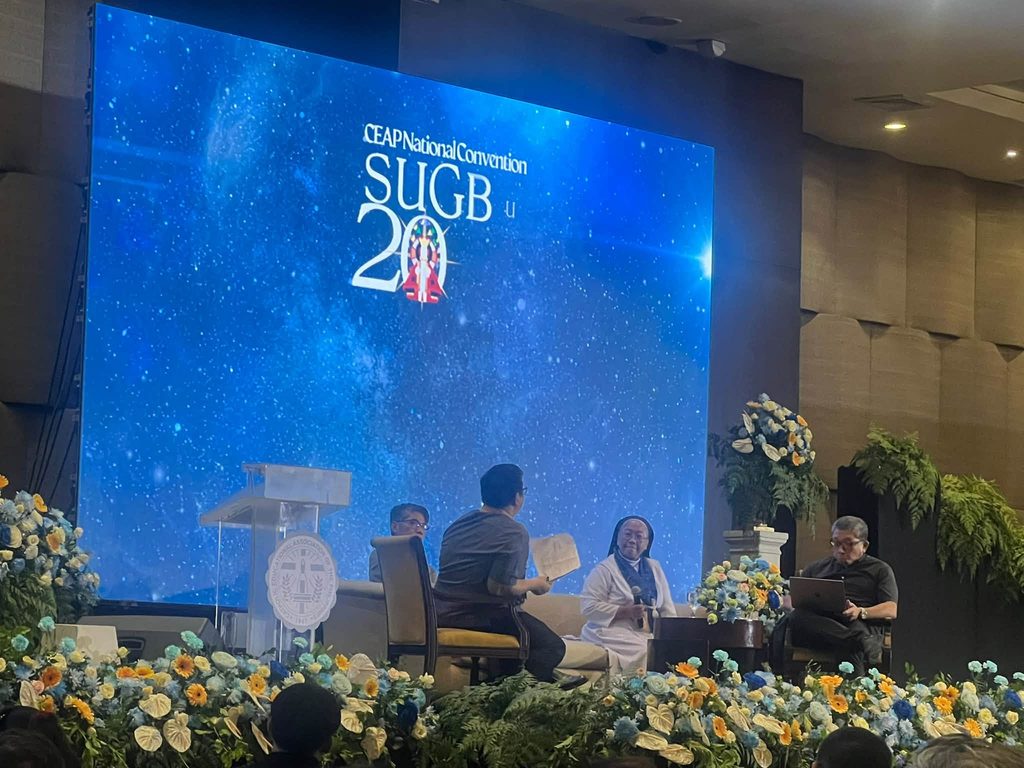
CEAP Concludes 2026 National Convention in Cebu, Charts a “Constellation of Hope” for Catholic Education
CEBU CITY — The Catholic Educational Association of the Philippines (CEAP) concluded its 2026 National Convention on September 25, bringing together thousands of Catholic educators, administrators, superintendents, and mission partners at the Waterfront Hotel in Lahug, Cebu City.
Held from September 22 to 25, the convention carried the theme “Newness in Catholic Education: Charting a Constellation of Hope.” It provided an opportunity for Catholic educational institutions to reflect on their shared mission, recognize developments in Catholic education, and explore ways of responding to the challenges and opportunities brought about by rapid social and global changes.
The convention opened with a spirit of gratitude and reflection. On behalf of the CEAP National Board, led by Fr. Karel S. San Juan, SJ, the organizers welcomed delegates and highlighted the importance of renewing the mission of Catholic education amid a changing educational landscape.
The gathering called on Catholic educators to lead with courage, faith, and imagination and to view education as a transformative ministry that contributes to the integral formation of learners. The opening ceremonies emphasized the shared journey of Catholic educational institutions in advancing faith, mission, and hope.
In keeping with the convention theme, the discussions also drew from the vision and teachings of Pope Leo XIV, particularly the call to discern the signs of the times and respond to the emerging needs of the Church and society. The convention presented Catholic educational institutions as a “constellation of hope,” with schools and communities working together to illuminate pathways toward a more humane, inclusive, and faith-filled
future.
Throughout the four-day convention, delegates participated in plenary sessions, discussions, and interactive activities organized around six pathways of renewal in
Catholic education:
- Newness in Formative Education – emphasizing interiority, discernment, and the holistic formation of the learner;
- Newness in Pastoral Education – promoting synodality, communion, collaboration, and shared participation in the mission of the Church;
- Newness in Skills Education – highlighting human-centered technical and lifelong learning that prepares learners for meaningful and dignified work;
- Newness in Ecological Education – strengthening the formation of stewards of creation in response to contemporary ecological challenges;
- Newness in Civic Education – fostering integrity, responsible citizenship, and meaningful participation in society; and
- Newness in Global Education – promoting solidarity, peace, equity, and engagement with global concerns while remaining grounded in faith and cultural identity.
Beyond the plenary sessions and workshops, the convention also provided an opportunity to recognize individuals and institutions for their contributions to Catholic education through the CEAP Awards. The recognition highlighted the commitment and service of members of the Catholic educational community and provided an opportunity to celebrate their contributions to the shared mission.
The convention concluded with the CEAP General Membership Meeting of School Heads and Superintendents, during which participants reflected on the outcomes of the gathering and discussed directions for strengthening Catholic education in the years ahead. The assembly also provided a venue for school leaders to share experiences, identify common concerns, and explore opportunities for collaboration among CEAP member institutions.
As delegates returned to their respective institutions, the convention’s message of hope and renewal remained central to the gathering. The 2026 CEAP National Convention reaffirmed the shared responsibility of Catholic educational institutions to form learners who are grounded in faith, committed to service, and responsive to the needs of society.
Through continued collaboration, discernment, and commitment to their mission, Catholic educators and institutions are called to become a “constellation of hope”—working together to illuminate pathways toward a more humane, just, and compassionate future for Filipino learners and communities.