

Community Extension
Our Purpose
NDKC strives to initiate programs and extend services to the least favored sectors and communities in Kidapawan and other municipalities in the Province of Cotabato.
General Objectives
- To facilitate learning opportunities for the students to ensure that they are socially aware and engaged in the transformation of the society.
- To provide learning opportunities to the people especially in the deprived communities, and alleviate the quality of their lives.
- To strengthen people’s capacity to access services and engage in productive activities.
Specific Objectives
The Community Extension Personnel shall:
- Conduct activities such as orientation, seminars/trainings and immersion on community development work.
- Initiate baseline studies, design and implement appropriate interventions for the community.
- Conduct value and spiritual formation and capacity-building activities for the least-favored people in the communities, especially the children, youth and women.
What We Do
Community Extension Services Programs
Marist Vocational Training Program
A 5-month vocational training for out-of-job youth and school drop-outs from disadvantaged and poor communities in the Diocese of Kidapawan, Mindanao. Implemented by NDKC-CES as a replication of NDDC, the mother unit. The program started in A.Y. 1992-1993 and is funded by MISEREOR, Germany.
Training offerings
Automotive Diesel MechanicsBeauty Care / CosmetologyComputer Service SystemConsumer Electronics ServicingDressmaking / TailoringElectrical Installation and MaintenanceHotel and Restaurant Services-HousekeepingRefrigeration and Air-conditioningPlumbingSmall Engine Servicing, Welding and Steel Fabrication
Alternative Learning System: Accreditation and Equivalency
The Accreditation and Equivalency (A&E) Program provides an alternative pathway of learning for out-of-school children, youth and adults who are basically literate but have not completed the 10 years of basic education mandated by the Philippine Constitution.
Through this program, school dropouts are able to complete elementary and high school education outside the formal school system.
ALS Skills Training Program
Alternative means to help out-of-school youth and adults, and unemployed women, through vocational skills training. Sessions are held every Saturday for 12 sessions over 3 months.
Courses
Food Trade (Baking / Food Preservation / Cooking)Beauty Care (Manicure and Pedicure / Make-up and Hairstyling)Basic Computer LiteracyDressmaking
Livelihood and Skills Training Program
Under the sponsorship of the Department of Business and Accountancy, this is a Marist way of taking part in the government responsibility of uplifting the quality of life of the poor, particularly in Kidapawan City. It provides skills training and financial assistance to qualified beneficiaries in a particular target community.
Read more
The program aims:
- To develop entrepreneurial ability among the beneficiaries.
- To create self-employment opportunities and to supplement family income of the beneficiaries.
- To develop people empowerment for the poor sector of our society.
- To uplift the standard of living of the people in the community.
- To develop social awareness and responsibility among the students and faculty.
Community Profiling, Research and Development
The program includes the gathering, organization and management, and utilization of community-based data, which serves as the basis for planning development and extension programs for all target and existing beneficiary communities.
This is hoped to effect successful development and implementation of programs.
Medical and Health Education Program
The primary objective is to encourage and mobilize people in the target communities to plan, carry out and sustain community-based medical and health activities. Its components include community organizing, a blood directory, sessions and workshops on emergency prevention and first-aid, alternative medicine, and health and environment education.
Read more
The program aims:
- To encourage people to participate and take responsibility for their own basic and immediate health activities.
- To educate the stakeholders about the importance of health and sanitation, causes of diseases and other preventive measures.
- To facilitate the delivery of health services to the stakeholder community by forging linkage with appropriate government and other agencies.
- To facilitate the organization and maintenance of emergency response group.
- To conduct trainings relative to health, sanitation, and other alternative medicine.
Outreach Activities
Reaching out beyond the classroom
Clean-up Drive
Initiated by the NSTP Department, with the NSTP students and facilitated by the NSTP teachers.
Blood-Letting Activity
Held once a year by the National Service Training Program (NSTP) Department, with blood donors who are residents from within and outside Kidapawan City.
Tree Planting
Usually done through the initiative of the Supreme Student Government Council (SSG).
Pamaskong Handog
Done every December through the generous hearts of the RE and RS students, who each give something that brings joy and happiness to less fortunate children in a particular community.
Timbayayong
A community-outreach program of the Cotabato Provincial Mobile Force Company (CPMFC) and their Advisory Council.
Our Partners
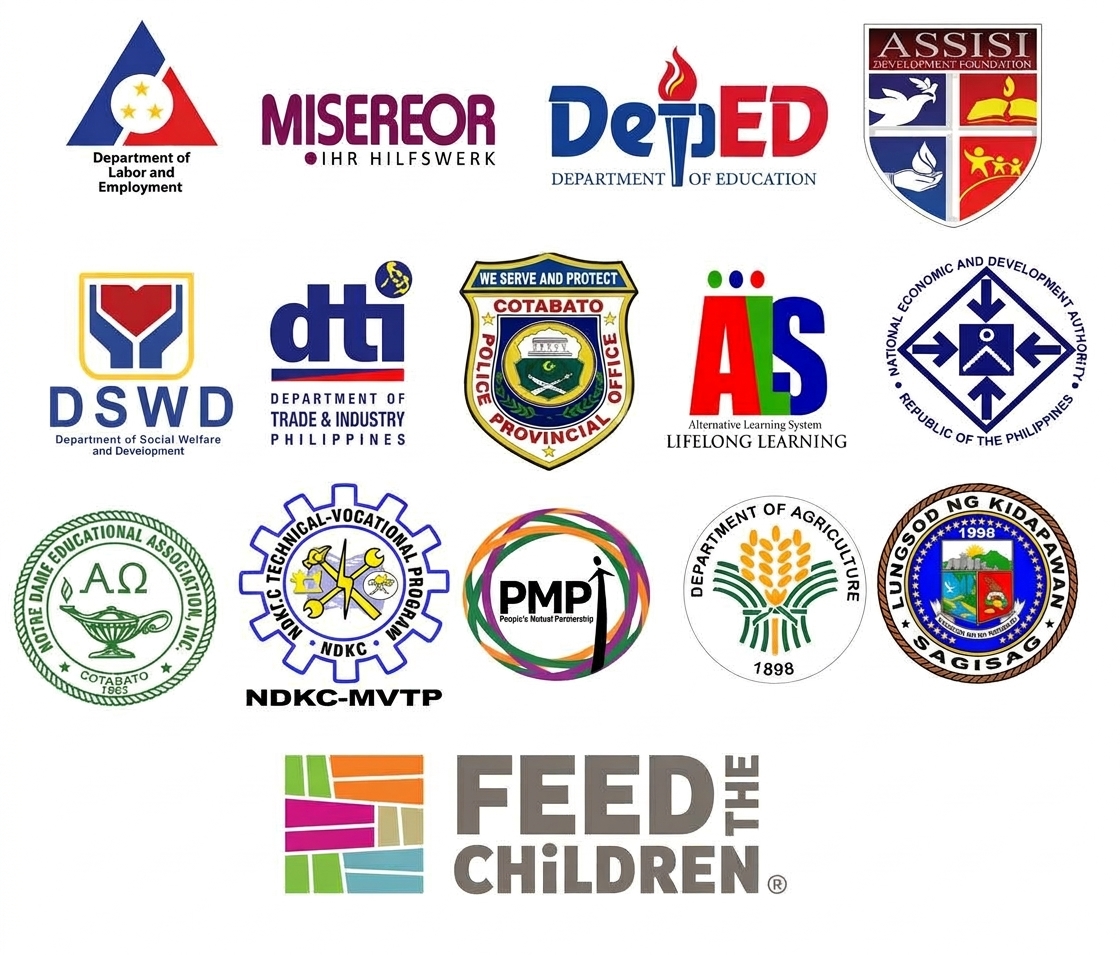
NDKC-CES in partnership with
The CES Office also links to different stakeholders including the Misereor, Assisi Development Foundation, Child Fund Japan, Jollibee Group Foundation, NDKC-MVTP, ALS, City Government of Kidapawan, DTI, NEDA, DOLE, DSWD, DA, DepEd, PMPI, NDEA and CPMFC.
Protocols
How to run a community service activity
For academic departments
- The Department Head / Class Instructor shall coordinate with the CES Personnel.
- The Department Head / Class Instructor shall write a letter elaborating their purpose in conducting the activity, the beneficiaries/recipients and responsible persons, and the proposed date.
- The Department Head / Class Instructor and CES Personnel will conduct a courtesy call to the designated person-in-authority in the community.
- The Department Head / Class Instructor will conduct/implement the activity in the community.
For student clubs and organizations
- The President of every departments/clubs shall coordinate with the CES Personnel.
- The President of every departments/clubs shall write a letter elaborating their purpose in conducting the activity, the beneficiaries/recipients and responsible persons, and the proposed date.
- The President of every departments/clubs and CES Personnel will conduct a courtesy call to the designated person-in-authority in the community.
- The departments/clubs will conduct/implement the activity in the community.
After the activity
A week after the activity, submit these community extension reports to the CES Office:
- Copy of Attendance Sheet
- Narrative Report
- Copy of Liquidation Report (if budget is needed)
- Photo Documentation
Gallery
CES in action
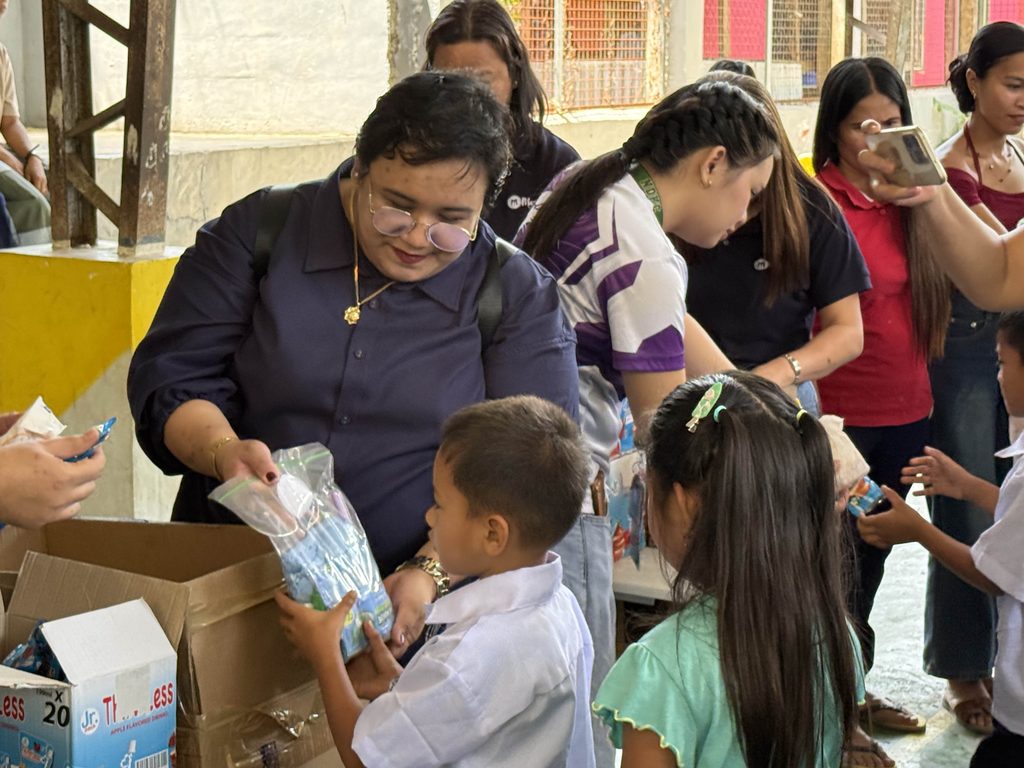
Feeding activity, done many times by the different departments in selected areas within and outside the City of Kidapawan.
Marist Vocational Training Program
Alternative Learning System
Skills training
Community profiling seminar
Medical and health education
Partner with CES or volunteer
Write to the CES Office at ces@ndkc.edu.ph to join an outreach activity or propose a partnership.
Contact the CES Office